


By
Rachel Watson
June 03, 2026 05:30 AM EDT
Tribal businesses stand to lose up to hundreds of millions of dollars in federal contracts as the Trump administration all but shuts down a program that has become a key revenue lifeline as Native businesses reduce their dependence on gaming.
With roots dating to the 1960s, the U.S. Small Business Administration’s 8(a) Business Development Program is one of the most well-known pathways for socially and economically disadvantaged small businesses, including those that are tribally owned, to gain training, technical assistance and contracting opportunities with the federal government.
Two tribes alone in West Michigan that participate in the 8(a) program have secured more than a half-billion dollars in federal contracts in recent years.
The Trump administration’s halting of the 8(a) program, as part of a sweeping effort to weed out federal support for diversity, equity and inclusion (DEI) initiatives, has in turn created more urgency for tribes to diversify their business ventures.
8(a) obligations to tribal businesses fell 40% year-over-year from $3 billion awarded in the first half of fiscal year 2024 to $1.8 billion in FY 2025, Fortune recently reported. Additionally the SBA accepted 65 new firms into the 8(a) program last year, a steep drop from nearly 500 in 2024. Data for 2026 are not yet available.
The program offers competitive set-aside and application-based sole-source awards for products and services needed by the government, such as professional services, facilities maintenance, construction and I.T.
The Washington, D.C.-based Native American Contractors Association sent a letter to the SBA on May 4 noting that all 8(a)-related approvals “appear to have stopped” since August 2025. As of May 28, no 8(a) requests had been processed since last summer, according to Quinton Carroll, NACA’s executive director.
NACA asked the agency to honor its own rules for timely processing of 8(a) applications and to “provide clear and transparent communication to pending applicants, including an anticipated timeline” for determinations.
The “slowdown or pause” has created a wave of uncertainty, Carroll said.
“We have businesses that are federal contractors, and this totally disrupts their long-term planning (and) makes it harder to decide where you’re investing, hiring and scaling your businesses,” he said.
Carroll noted that because 8(a) contracts typically run for three to five years, firms graduate from the program each year, and new contractors are needed.
“If you don’t allow any new participants in, it’s kind of a slow drain of the program as a whole,” Carroll said.
The 8(a) is housed within the U.S. Small Business Administration, which has moved to dismantle the program since 2025 as part of President Donald Trump’s crackdown on federally backed DEI initiatives.
Trump appointed former Georgia Sen. Kelly Loeffler to head up the SBA in February 2025. A few months later, Loeffler ordered an 8(a) program audit amid allegations that a federal contracting officer and two contractors had engaged in fraud.
Since the audit, which largely wrapped in March, the SBA has slowed the pace of contract awards and effectively stopped certifying new businesses for 8(a) eligibility.
The audit resulted in the SBA terminating 628 firms in March that had declined to produce three years’ worth of financial documents to the agency as part of the audit.
Dowagiac-based Mno-Bmadsen, the non-gaming investment arm of the Pokagon Band of Potawatomi that has a portfolio of about 20 businesses supporting 700 jobs, participates in the 8(a) program through its Bodwé Professional Services Group.
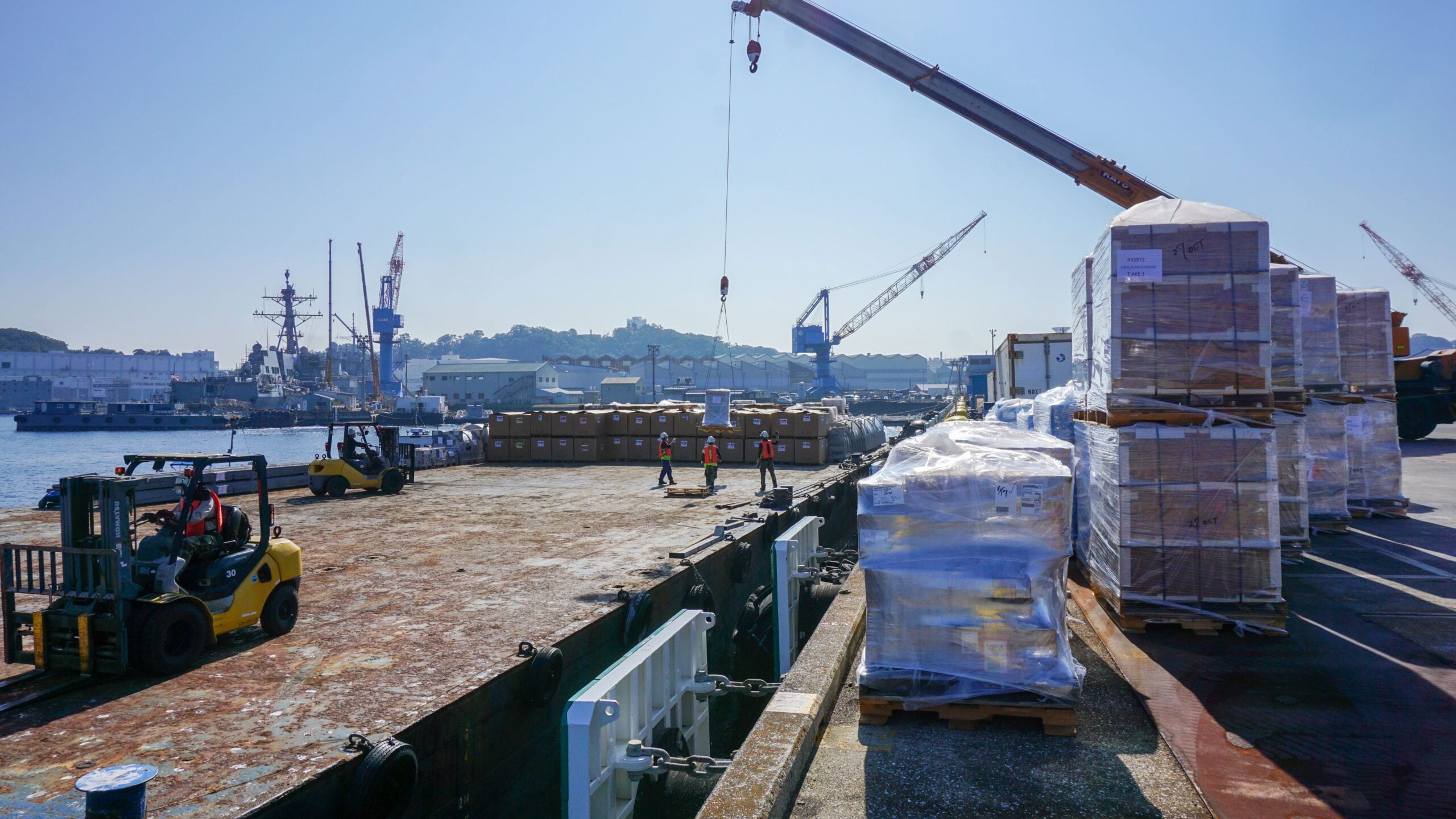
Bodwé notably won a 10-year, $225 million logistics contract with the Department of Defense in late 2024.
Julio Martinez, CEO of Mno-Bmadsen, said Bodwé survived the audit and is still an 8(a) participant, though the firm has noticed a slowdown in the finalizing of awards and work orders since the last fiscal year ended on Sept. 30. He said the firm is “shortlisted” on a few proposals that it has been waiting to hear back on for months.
Martinez recently signed the NACA letter and began engaging more actively with NACA leadership.
Martinez said Bodwé was fortunate that it was already independently audited, as less-prepared tribal entities found the process “cumbersome” and discovered compliance issues.
For his part, Martinez says he tries to maintain a positive outlook.
“Sometimes, (with) this kind of scrutiny, the cream rises to the top,” he said. “For the tribes that have put the effort in and done things right, I think it’s a good thing, and at least for our companies, we’re able to shine a bit and show that we can (be) responsible contractors.”
While other factors such as high interest rates may prove more challenging for tribal business growth, Martinez said the turbulence of federal contracting and the economy illustrate the need for diversification.
“The idea is not to rely on any one (sector) but diversify amongst sectors and even amongst strategies,” he said.
Grand Rapids-based Waséyabek Development Co., the non-gaming economic development arm of the Nottawaseppi Huron Band of the Potawatomi, formed a Federal Group to focus solely on 8(a) certification and federal contracting.
The firm has ramped up its federal contracting division during the past several years, securing a $151 million contract with the Department of Energy in 2020, followed by a $205 million contract for services at the National Energy and Technology Laboratory last June. It also is working on a new navigation technology for Department of Defense ground vehicles.
Deidra Mitchell, Waséyabek’s president and CEO, declined to comment for this report, citing the complexity of the issue.
Tanya Gibbs, a partner with the Native-owned and Grand Rapids-based Mshkawzi Law LLP, works with tribal clients across the U.S. and Canada who have been affected by the 8(a) program slowdown.
She said one undisclosed client had just submitted an application to become 8(a) certified when the program was upended.

“They ended up submitting the application anyway but haven’t heard anything back from anybody and really have decided that they’re not going to push the issue until everything figures itself out, or maybe until the next election,” Gibbs said. “At this point, they’re like, ‘Sure, we could waste a bunch of time and money on our legal team and potentially engage the tribe’s lobbyists to try to push our application through, but for what?’”
Gibbs also is board secretary and treasurer of Twelve Clans Inc., the tribal economic development arm of the Ho-Chunk Nation in Wisconsin, which decided not to submit its application to become 8(a) certified because of the recent pullback on awards.
Another client who was already 8(a) certified was nonetheless “freaked out” by the audit paperwork, which was due just 45 days after the notification letter arrived, Gibbs said.
“That was kind of a mad dash, and they provided everything they needed to provide and everything came out all right, but it was just a huge burden, and everyone was freaking out, right at year end and over the holidays, so I think that added to everybody’s stress,” Gibbs said.
She added that same client is considering abandoning the 8(a) program to pursue private contracting opportunities.
“Looking ahead, it’s pretty clear that there’s been a significant reduction in contracts being awarded, and I think that extra level of scrutiny is just (making them think) let’s let it run as it runs, but they’re not going to be putting anymore investment into the business, at least not right now,” she said.
The SBA’s clamp down comes as federal contracting grows to a more economically significant piece of tribes’ revenue pie.
Increasingly since the 1990s, tribes have sought federal contracting as a way to diversify their revenues outside gaming.
From 1988 to 2021, federal contracting revenue for tribes grew faster than revenue from gaming. During that period, the average annual growth rate of federal contracting revenue was 41.6%, compared to 16.8% for gaming revenue, according to data from the Center for Indian Country Development at the Federal Reserve Bank of Minneapolis.
In 2021, 4,096 active businesses were owned by 330 federally recognized tribes, according to the CICD.
The CICD’s data ultimately show that tribes participating in gaming or federal contracting tend to own more businesses than those without gaming or federal contracting, as both act as a multiplier for opportunity.
Carroll, who heads up NACA, said if the SBA doesn’t course correct soon, tribes could be looking at a revenue cliff within three to five years. Now, he said, is the time to diversify even more.
“Every federal contractor right now I think is kind of taking a hard look inside their businesses to ensure that they’re competitive,” Carroll said.
Locations
Mno Bmadsen
415 E. Prairie Ronde St.
Dowagiac, Michigan 49047
269-783-4111


